UPDATED 11:00 Tuesday 11/03/2025 (AEDT)
The recovery is underway with the downgraded system dumping intense and heavy rain at the weekend that tapered off on Monday (10/03/2025). SES and power restoration crews are working to restore power and functionality with some schools, public transport and infrastructure opening on a rolling basis. Data and telecom connection issues continue to cause frustration for locals in pockets.
The flood situation remains both dynamic and easing generally, however with rainfall placing pressure on river catchments giving rise to a series of minor to moderate flood warnings (See: Queensland Warnings Summary) and a series of flood warnings are also active for parts of northern NSW (See New South Wales Warnings Summary).
While recovery crews are active there are still significant power outages throughout SEQ and the Far North Coast of NSW. This issue, coupled with localized flood warnings, is creating the greatest challenge for fuel retailers in the affected area.
1. Current situation?
- 1.1. Storm outlook and likely impacts
- 1.2. Fuel Distribution
2.0. Fuel Retailer considerations
- 2.1. Consumer visitation
- 2.2. Power supply
- 2.3. Timing for restoration of fuel supplies
- 2.4. Post disaster fuel and convenience supplies
- 2.5. Public notification of fuel availability
- 2.6. Fuel Retail network operation
- 2.7 Preparing for and responding to flood
- 2.8 Paying staff during a natural disaster
3.0. Fuel Distributor considerations
- 3.1. Fuel Terminal Operations
- 3.2. Driver safety
- 3.3 NSW Road closures and load restrictions for non essential transport
4.0 Stay Up-to date
- 4.1. BOM Warnings
- 4.2 Monitor Media and Government announcements
- 4.3. ACAPMA Updates
5.0. Need help?
1.0. Current state-of-play
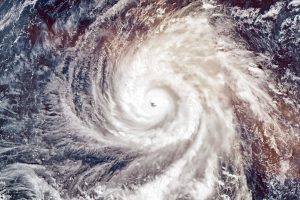
1.1. Storm outlook and likely impacts
The recovery is underway with the downgraded system dumping intense and heavy rain at the weekend that tapered off on Monday (10/03/2025). SES and power restoration crews are working to restore power and functionality with some schools, public transport and infrastructure opening on a rolling basis. Data and telecom connection issues continue to cause frustration for locals in pockets.
The flood situation remains both dynamic and easing generally, however with rainfall placing pressure on river catchments giving rise to a series of minor to moderate flood warnings (See: Queensland Warnings Summary) and a series of flood warnings are also active for parts of northern NSW (See; New South Wales Warnings Summary).
While recovery crews are active there are still significant power outages throughout SEQ and the Far North Coast of NSW. This issue, coupled with localized flood warnings, is creating the greatest challenge for fuel retailers in the affected area.
1.2. Fuel Distribution
Some fuel deliveries have resumed to service stations as a result of terminal re-openings. The situation is dynamic, but it is currently understood that:
- Ampol Terminal is open.
- Shell/Viva Terminal is open.
- BP’s terminals are open (Whinstanes and Bulwer).
- Chevron Terminal is open.
- IOR Terminal is open.
- Pacific Terminal (Freedom) is open.
2.0. Fuel Retailer considerations
2.1. Consumer visitation
Customer visitation rates are expected to increase markedly from today in all areas as the community and emergency services engage in the recovery effort and those that are able to do so, return to work and their kids return to school. Roads, public transport and schools are opening as cleared, leading to increased customer visitation where power and flood levels allow, however power issues particularly make customers flows very dependant on micro local conditions.
The Queensland Government (fuelprices@epw.qld.gov.au) has asked retailers to assist customers and emergency services in finding fuel during this time by entering the ‘out-of-stock’ price code ‘9999’ on fuel price apps (and rate boards) if they are unable to sell a particular fuel grade – or are out of stock altogether.
This will assist the community in determining what fuel is available in a given area and will be particularly useful for the refueling of emergency services and disaster recovery vehicles.
2.2. Power supply
Power supply remains the biggest issue in the disaster area. Large scale outages are being reported in Brisbane, the Gold Coast and parts of Northern NSW. While it is understood that service repair teams have been fully deployed across the region, the nature and extent of the damage to the network means that power outages are expected to persist throughout at least the first half of the week – and possibly into the weekend.
2.3. Timing for restoration of fuel supplies
All but one of the Brisbane Fuel Terminals have reopened and Fuel Distributors are now making deliveries across the Region. That said, there is likely to be some interruption to these services as a result of road closures and localised flooding.
Fuel retailers are encouraged to liaise with their Fuel Distributors in respect of delivery patterns over coming days.
2.4. Post disaster fuel and convenience supplies
ACAPMA has received clarification from the QLD Government that the necessary Ministerial Declarations have been to allow fuel retailers to restock their outlets (fuel and shop) 24 hours a day, seven days a week – to ensure that the public have access to these essential goods as soon as practical. These declarations extend to those businesses in the supply chain servicing P&C retailers.
These declarations are not required in NSW.
This means that petrol stations (and their suppliers) across SEQ and the Far North Coast of NSW can work without restriction to restock fuel and convenience supplies during the recovery period.
2.5. Public notification of fuel availability
Authorities in NSW and Queensland have asked that fuel retailers update fuel reporting protocols to advise stock-outs by utilising the existing fuel price reporting mechanisms that exist in each State. This practice will allow consumers to use established fuel price apps to seek out available fuel during the fuel restoration process, while also minimizing staff aggression.
2.6. Fuel Retail Network operation
Significant parts of the fuel retail network remain closed Brisbane and the Gold Coast (most affected) due to a combination of large-scale power outages and localised flooding. Most of the sites in areas of NSW (i.e. Lismore, Murwillumbah and Ballina) have either reopened or are in the process of being reopened today (Monday, 10 March 2025).
2.7 Preparing for and responding to flood
The key risk now is flooding, with the greatest risk in areas such as Lismore and Murwillumbah in NSW and parts of the Gold Coast.
As the wind and water is causing many sites to consider locking down for an inundation, some for the first time, the ACAPMA Best Practice Guide for Flood Preparation and Response has been a go to for sites to get ready as the waters rise, and most importantly, to ensure a safe and compliant clean up and reopening as once the waters recede.
“The ACAPMA Best Practice Guideline on Flood Preparation and Response has been developed with the input of regulators, experts, operators, equipment suppliers and contractors, to serve as a consolidated and detailed guidance resource and checklist for operators and contractors to utilise in what is an intense and period” explains ACAPMA’s Elisha Radwanowski.
It is vital that the comprehensive fuel systems are prepared for inundation with water and that safety checks are completed after an inundation to protect the business, the environment and the community. Failure to undertake the proper checks of the fuel system, and remedy any issues observed, represents a serious risk of selling contaminated fuel to consumers and/or discharging fuel into the natural environment.
“It therefore follows that, regardless of the pressure for the business to reopen quickly, failure to follow the proper process for commissioning a fuel system after a flood event risks serious ongoing reputational damage and/or financial loss for the operator”, said Mark McKenzie.
“This Best Practice Guideline explores the key considerations and responses and details them in a series of checklists for fuel expert contractors and fuel operators to follow to ensure they are considering and responding to the risks on their site”, continued Elisha.
“This includes checklists such as; Preparing for an Incoming Flood Event, Responding to a Stage 1 Flood Event, Responding to a Stage 2 Flood Event and Responding to a Stage 3 Flood Event, as well as a handy Consolidated Flood Event Response Checklist”, explains Elisha.
To view the ACAPMA Best Practices Guideline please see; ACAPMA Best Practice Guideline on Flood Preparation and Response – https://acapma.com.au/wp-content/uploads/2023/05/ACA127_BPG_Flood_web.pdf
2.8 Payment for staff during natural disasters
Australia is the land of flooding rains and raging bush fires. The last few years have driven that point home repeatedly. As the cyclone approaches it is important for operators to understand the practical concerns for employers in the downstream petroleum industry.
Section 524 of the Fair Work Act 2009 (the Act) outlines provisions allowing employers to stand down employees, without pay, when they cannot be ‘usefully’ employed for a specific amount of time, because of a stoppage of work that is outside of the control of the employer. This includes natural disasters, as well as major or key equipment failure that can not be attributed to the employer (well maintained equipment).
In the event of a stand down the onus is on the employer to notify employees of the situation that has necessitated the stand down, to communicate the payment situation and to keep the employees apprised of when the stand down is expected to be lifted and normal duties resumed.
How and what is paid to an employee in the event of a stand down is governed by the employment instrument the contract, Award or agreement. If the industrial instrument does not refer to stand down provisions then Section 524 of the Act prevails.
The Act states that provided the stand down meets the requirements outlined above the employees can be stood down without pay. This does not mean that the business cannot choose to pay the employee or allow the employee to dip into accrued leave entitlements.
In the downstream petroleum industry the employment instruments generally are:
- Clerks Private Sector Award 2020;
- Vehicle Repair, Services and Retail Award 2020; and
- Road Transport and Distribution Award 2020
All of which are silent on stand down which means the Act applies – so the employees can be stood down without pay in the event of a natural disaster that impacts site operation.
3.0. Fuel Distributor considerations
3.1. Fuel Terminal Operations
The situation is dynamic, but it is currently understood that:
- Ampol Terminal is open.
- Shell/Viva Terminal is open.
- BP’s terminals are open (Whinstanes & Bulwer).
- Chevron Terminal is open.
- IOR Terminal is open.
- Pacific Terminal (Freedom) is open.
3.2. Driver safety
The majority of major roads and bridges in SEQ have been reopened but there are numerous local road closures across SEQ due to flooding and/or tree falls.
There are a number of significant road closures in Northern NSW (see below), but the Pacific Motorway is now open between Sydney and Brisbane.
3.3 NSW Road closures and load restrictions for non-essential transport
Roads remain affected due to the weather conditions associated with Ex-Tropical Cyclone Alfred.
While severe weather conditions have eased significantly in most areas, conditions may deteriorate quickly and roads may need to close at short notice.
The M1 Pacific Motorway remains open through to Queensland.
In Queensland;
- The major motorway network remains open and largely unaffected.
- For road closures and conditions in QLD see https://qldtraffic.qld.gov.au/
In New South Wales;
- The Gwydir Highway has reopened in both directions after being closed earlier due to fallen trees and road damage.
- Summerland Way has also reopened in both directions between Grafton and Casino.
- Other major roads remain closed in parts of northern New South Wales due to severe weather conditions. All non-essential travel in affected areas should be avoided.
- As conditions are changing rapidly, please visit Live Traffic when planning your journey.
4.0 Stay Up-to date
4.1. BOM Warnings
All businesses are advised to monitor local media and regularly visit the BOM Warnings page on the Australian Bureau of Meteorology’s website.
- QLD Businesses – Queensland Weather and Warnings Summary
- NSW Business – New South Wales Warnings Summary
4.2 Monitor Media and Government announcements
The Queensland and NSW Governments have already stood up their emergency coordination committees and are already providing significant information to the general community to support the recovery process.
Businesses should monitor the media to ensure that they are familiar with the latest warnings and related information.
4.3. ACAPMA Updates
ACAPMA is working with the Queensland Government in respect of the recovery process.
The Association will continue to provide information to all businesses as it comes to hand.
5.0. Need help?
The first point of call for assistance are emergency services providers, State Emergency Services Agencies, relevant State Government authorities, and Local Councils.
If members are experiencing business issues associated with the restoration of services in the period immediately following this event – and believe that they are not securing sufficient assistance from government authorities – they are invited to contact ACAPMA at any time over coming days.
Key contacts are as follows:
- Mark McKenzie (CEO), M| 0447 4444 011, E| markm@acapma.com.au
- Elisha Radwanowski (Executive Manager), M| 0428 020 083, E| elishar@acapma.com.au
Here to Help
ACAPMA Employment Department professionals are available to assist members with stand down and all employment provisions via employment@acapma.com.au
HR Highlights are things to consider, implement and watch out for in your business. They are provided as general advice, Members are reminded that they can seek further advice on their situation by emailing employment@acapma.com.au its free for members. ACAPMA membership is affordable at only $860 per year for a single site and valuable with sites gaining HR advice support and representation as well as a raft of other benefits and discounts. Click here to learn more about ACAPMA membership.
ACAPMA
