Consumers have reaped the benefit of lower fuel prices in 2025, which were, on average, lower for the year than they were in 2024 despite declining petrol sales volume, according to the latest industry reporting from the ACCC.
The most recent ACCC Quarterly Petrol Price Monitoring Report has highlighted a modest rise in the September 2025 quarty to retail fuel prices, but the annual average still remains under that of 2024.
The ACCC reporting covers capital cities and 190 regional locations nationally.
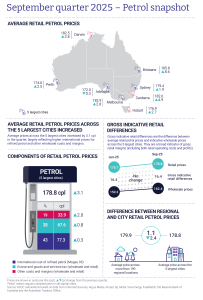
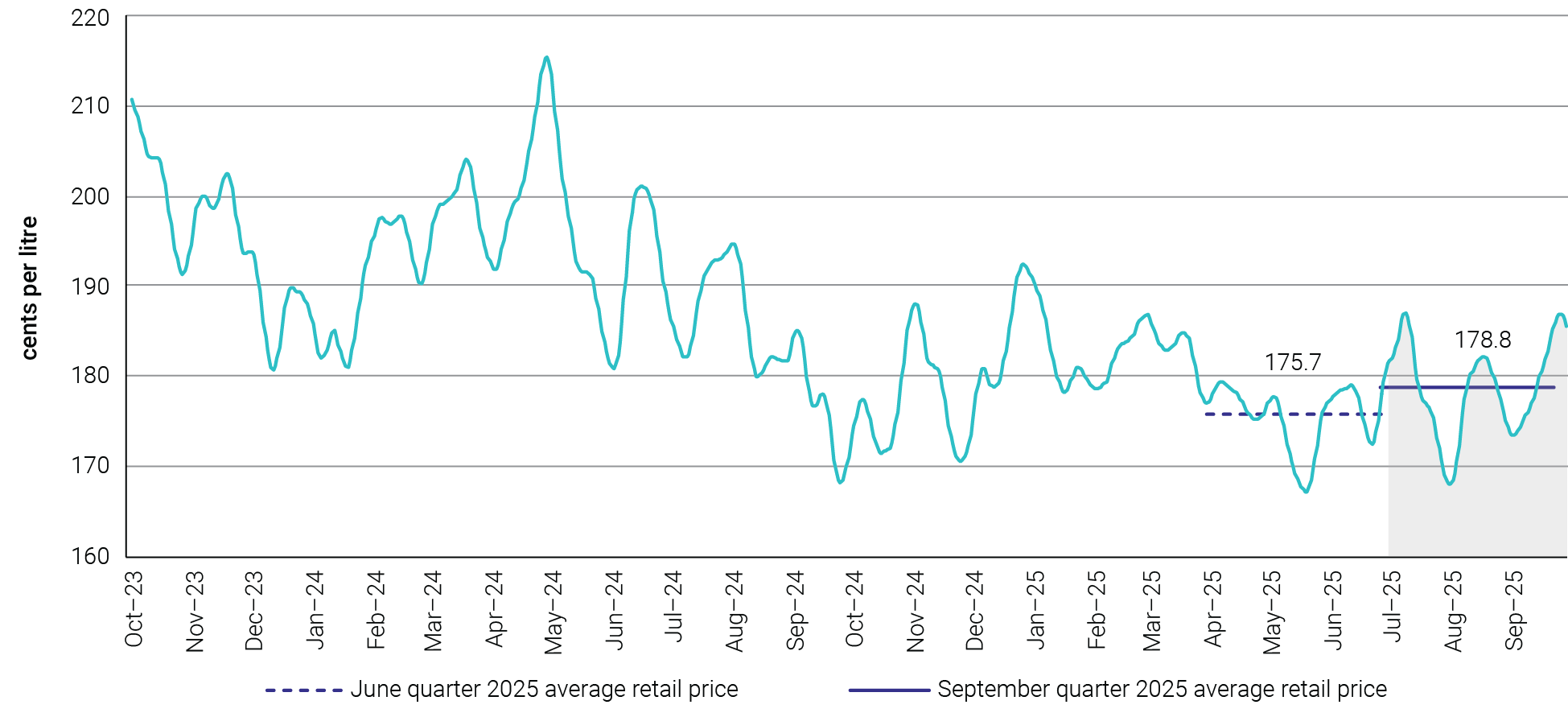
In the September Quarter prices across the five largest cities (Sydney, Melbourne, Brisbane, Adelaide, and Perth) were 178.8 cents per litre (cpl), an increase of 3.1 cpl from the previous quarter.
In announcing the results ACCC Commissioner Anna Brakey said “Although average prices were higher in the September quarter, they were lower than price levels throughout most of 2024,”.
Seven-day rolling average retail petrol prices across the five largest cities in nominal terms
Source: ACCC calculations based on data from Informed Sources.
Notes: The grey shaded area in the figure represents the September quarter 2025. A 7-day rolling average price is the average of the current day’s price and prices on the 6 previous days.
“The increase in international refined petrol prices was partially offset by a higher quarterly AUD-USD exchange rate, which made the international cost of refined petrol less expensive in Australian dollar terms,” Ms Brakey said.
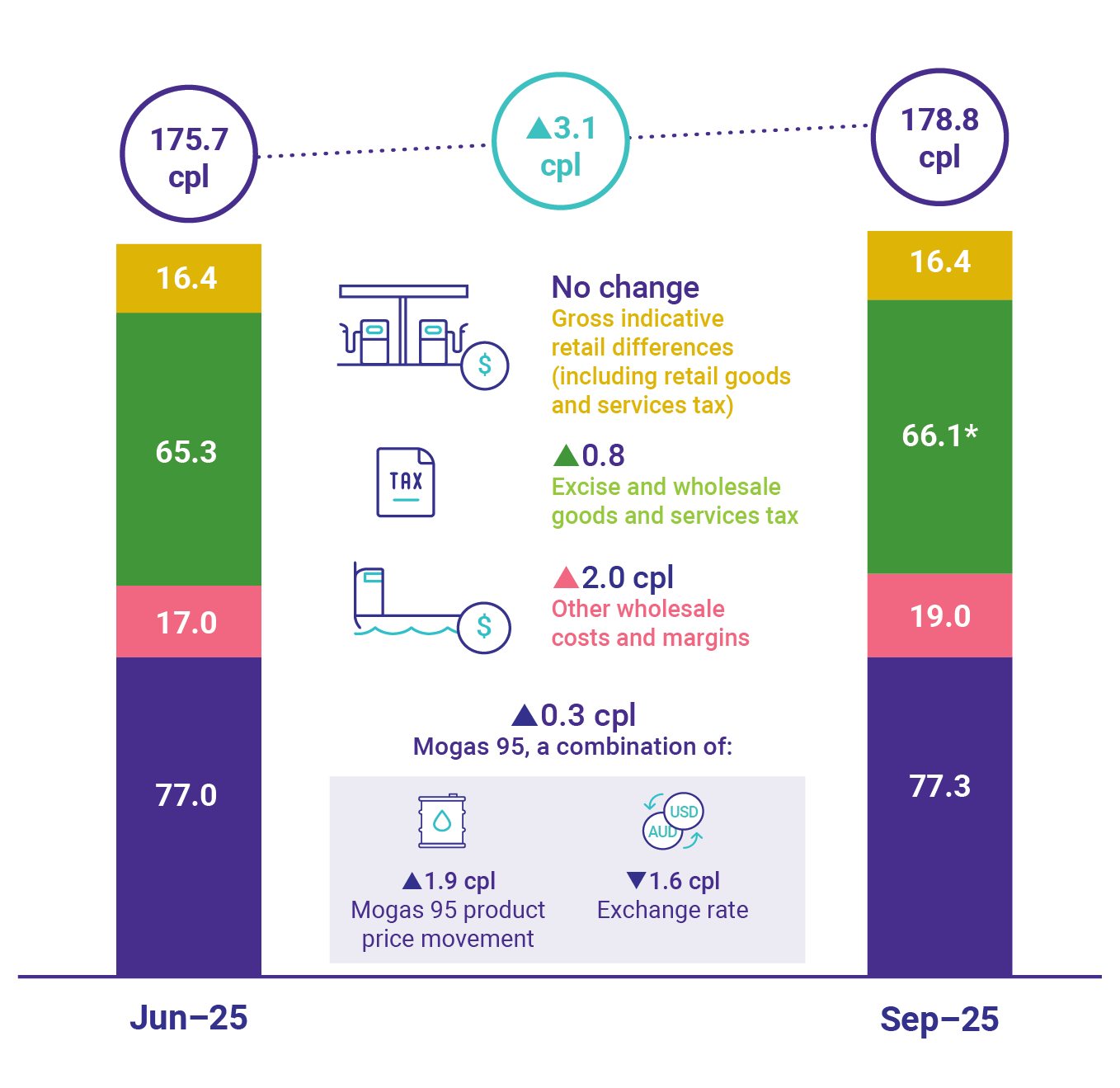
Components of average retail petrol prices across the five largest cities – Australian cents per litre
Source: ACCC calculations based on data from Informed Sources, Argus Media, Ampol, bp, Mobil, Viva Energy, FuelWatch, the Reserve Bank of Australia and the Australian Taxation Office.
Notes:  cents per litre change from the previous quarter.
* Excise and wholesale goods and services tax (66.1 cpl) excludes a component of retail goods and services tax (1.5 cpl) in the above figure. This is for consistency in reporting gross indicative retail difference figures throughout this report, which include a small component of goods and services tax. Total excise and goods and services tax for both wholesale and retail (67.6 cpl) is shown in the petrol bowser in the ‘September quarter 2025 – Petrol snapshot’
Other wholesale costs and margins include import and wholesale related costs such as international shipping, the quality premium for Australian fuel standards, insurance and loss, local wharfage and terminal operation, as well as wholesale marketing margins.
Gross indicative retail differences are a broad indicator of gross retail margins and include both retail operating costs and retail profits. Gross indicative retail differences represent the difference between average retail petrol prices and indicative wholesale prices.
Quarterly average petrol gross indicative retail differences were 16.4 cpl across the five largest cities, the same as in the previous quarter.
Diesel prices were also higher in the quarter
Quarterly average retail diesel prices increased in all capital cities. Across the five largest cities, quarterly average retail diesel prices were 181.8 cpl, an increase of 3.4 cpl from the previous quarter.
The increase in average retail diesel prices was driven by higher international refined diesel prices (Gasoil 10 ppm).
Sales of regular unleaded petrol have been declining in Australia
Sales of regular unleaded petrol have been declining over time as petrol vehicles continue to become more fuel efficient and travel patterns evolve, including more working from home arrangements.
The decline of petrol sales has also been impacted by more battery, hybrid, and plug-in vehicles on the road. The number of registered battery electric vehicles has increased significantly over the past few years, although in early 2025 they still made up only around 1.2 per cent of total registered vehicles.
Diesel sales have gradually increased over time, as the number of registered diesel vehicles has grown by more than a million between 2021 and 2025.
Every state and territory now has a fuel price transparency scheme in place
The launch of the Servo Saver feature on the Service Victoria app in October, marked the completion of phase one of the Victorian Government’s Fair Fuel Plan.
This near real-time pricing data follows the introduction of mandatory fuel price reporting requirements on fuel retailers and means that every state and territory now has a fuel price transparency scheme in place.
“We are pleased that comprehensive near real-time pricing data is now available to Victorians,“ Ms Brakey said.
“There is often a range of prices available, and we encourage motorists to utilise fuel price apps and websites to shop around for lower prices to save some money at the bowser.”
ACAPMA
